
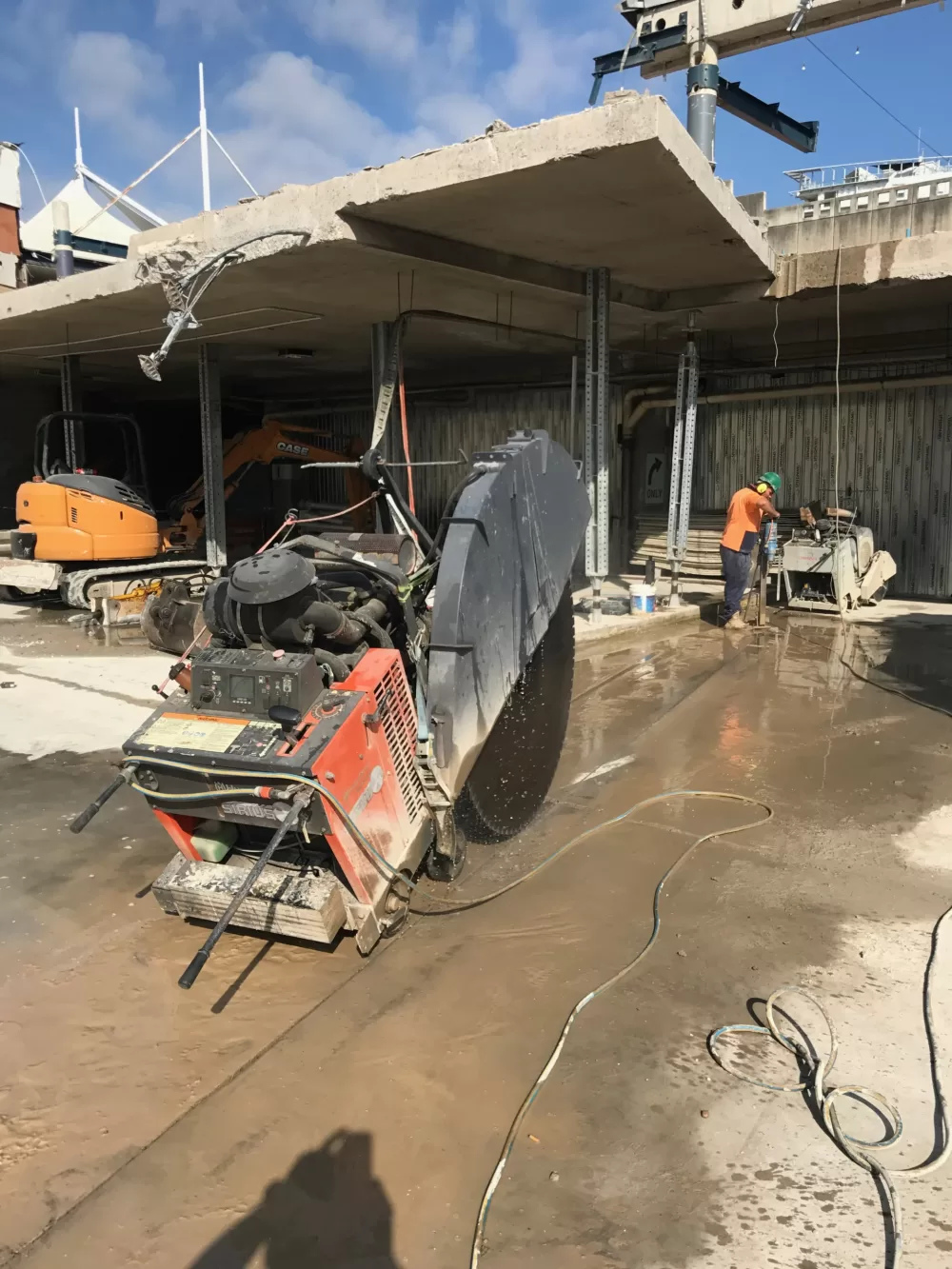
Before hiring concrete cutters in Brisbane, compare the proposed cutting method, relevant experience, site controls and written scope. Share the cut dimensions, slab thickness if known, access details and photos. Ask what the quote includes, who handles waste and slurry, and which checks are needed before work starts.
For straight slab cuts, see our floor sawing service; round penetrations use core drilling.
1. Experience and Expertise in Concrete Cutting
The experience of a concrete cutting company is one of the most important factors to consider. Concrete cutting is a highly technical process that requires precision, skill, and a deep understanding of the material. A reputable company will have extensive experience working with various types of concrete, including reinforced concrete, asphalt, and precast concrete.
Moreover, an experienced company will have a track record of handling complex cutting techniques like core drilling, wall sawing, and floor sawing. If you need a specific service, such as cutting for plumbing installations or electrical wiring, ensure that the company specializes in these areas. Ask about their expertise in handling difficult cutting projects in Brisbane’s varying climates and terrain, as these factors can affect the type of equipment and techniques used.
2. Advanced Tools and Equipment
Ask which equipment suits the opening, material, cut depth and available access. A floor saw makes straight slab cuts, a wall saw works along a mounted track, and a core drill forms round penetrations. Compare the proposed method with the dimensions and location of your cut.
Ask how the equipment is maintained and how the work area will be controlled. Discuss dust suppression or extraction, slurry collection, power and water requirements, and handling the cut sections. New equipment alone does not establish safe working conditions or guarantee a particular result.
3. Which licences and training apply to the job?
Ask which licences apply to the work you are booking. Where a QBCC licence is required, check the contracting name, current status, conditions and licence class against the proposed scope using the QBCC licence-check guidance. A licence check does not replace site-specific planning or confirm that every task is covered.
Ask what task-specific training and site induction the workers have completed. A general construction induction card covers basic construction safety knowledge; it is not proof of specialist cutting competence. Ask how training, supervision and the proposed work method address your job, rather than relying on a generic certification claim.
4. Check site controls and insurance cover
Ask who will assess the cutting hazards and agree the site controls before work starts. Discuss concealed services, silica dust, noise, access, exclusion zones and support or removal of cut sections. The Queensland silica guidance explains why cutting concrete needs suitable dust controls; equipment choice alone is not a safety guarantee.
Request a current certificate of currency for relevant insurance and confirm the insured business name, policy period and cover for the proposed work. Ask the contractor or insurer about exclusions and limits. Insurance does not remove site risks or mean every possible loss will be covered.
5. Competitive Pricing and Transparent Quotes
Request an itemised written quote for the same cut lengths, depths and access conditions from each contractor. Confirm whether pre-cut checks, equipment, labour, water and power, slurry collection, lifting and waste removal are included. Ask how variations will be agreed if the site conditions differ from the information supplied.
A lower price alone does not show that a contractor uses poor equipment or lacks experience. Compare the proposed method, included work, exclusions and site responsibilities. If prices differ substantially, ask each contractor to explain the scope before deciding.
6. Reputation and Client Reviews
One of the best ways to gauge the quality of a concrete cutting company is by checking its reputation. Look for online reviews and testimonials from past clients to get an idea of their work quality and customer service. Websites like Google Reviews, Facebook, and Yellow Pages are excellent resources for this.
You can also ask the company directly for references from previous Brisbane-based clients, especially those with similar projects. A trustworthy company will have a solid reputation and will be eager to showcase their past work.
7. Availability and Project Timelines
Timeliness is crucial when working with concrete cutting services, especially in construction projects where delays can affect the overall timeline. When hiring concrete cutters in Brisbane, ask about their availability and estimated timeline for your project.
For time-sensitive projects, it’s essential to choose a company that can meet your deadlines without compromising quality. Make sure to discuss the specifics of the job beforehand, so the company can provide a realistic timeline for when the work will be completed.
8. Range of Services Offered
Match the service to the task: core drilling forms round penetrations, while wall sawing and floor sawing create cuts for openings or removal. Concrete grinding abrades the surface for preparation or high-spot removal; it is a separate process from sawing through a slab.
If the project needs several methods, ask which tasks the contractor will carry out and which need another trade. Agree the sequence, access arrangements and responsibility for checking the structure and concealed services. A broad service list does not confirm that every part of your project is included.
FAQs
Why is professional concrete cutting important?
Professional concrete cutting uses a method selected for the opening, material and access conditions. Ask the contractor to explain the proposed equipment, pre-cut checks, dust and slurry controls, and cut-section handling. These arrangements need to suit the actual site; no method guarantees a risk-free job.
How do I choose the right concrete cutting company in Brisbane?
Compare relevant experience, the proposed cutting method, applicable licences, current insurance and a written scope. Ask who will check concealed services and manage dust, slurry and cut sections. Confirm exclusions, site responsibilities and any required approvals before booking.
What types of concrete cutting services do you offer?
Concrete cutting methods include core drilling for round penetrations, wall sawing for track-guided cuts, and floor sawing for straight slab cuts. Grinding removes material from the surface rather than cutting an opening through the slab. Confirm which method and any removal work your quote covers.
How much does concrete cutting cost in Brisbane?
Request a written quote for your actual cut lengths, depths and access conditions. Ask whether the scope includes scanning or other pre-cut checks, water and power, slurry collection, lifting cut sections and waste removal. Compare quotes for the same work and confirm any exclusions or extra charges before booking.
How long does concrete cutting take?
The timeline for concrete cutting depends on the size and complexity of the project. Small residential jobs may take just a few hours, while large commercial projects may take several days. Always confirm timelines with your contractor before starting.
Are your concrete cutting services available for both residential and commercial projects?
Yes, many concrete cutting companies in Brisbane offer services for both residential and commercial projects. Whether you need to cut a slab for a new driveway or create space for plumbing in a commercial building, a professional service can meet your needs.
Discuss your concrete cutting job
Send Sirius Concrete Cutters the site location, photos, proposed cut dimensions and access details. We can discuss the relevant floor sawing or core drilling scope for your project.
Call 0499 771 066 or request a quote and confirm the scope before booking.