
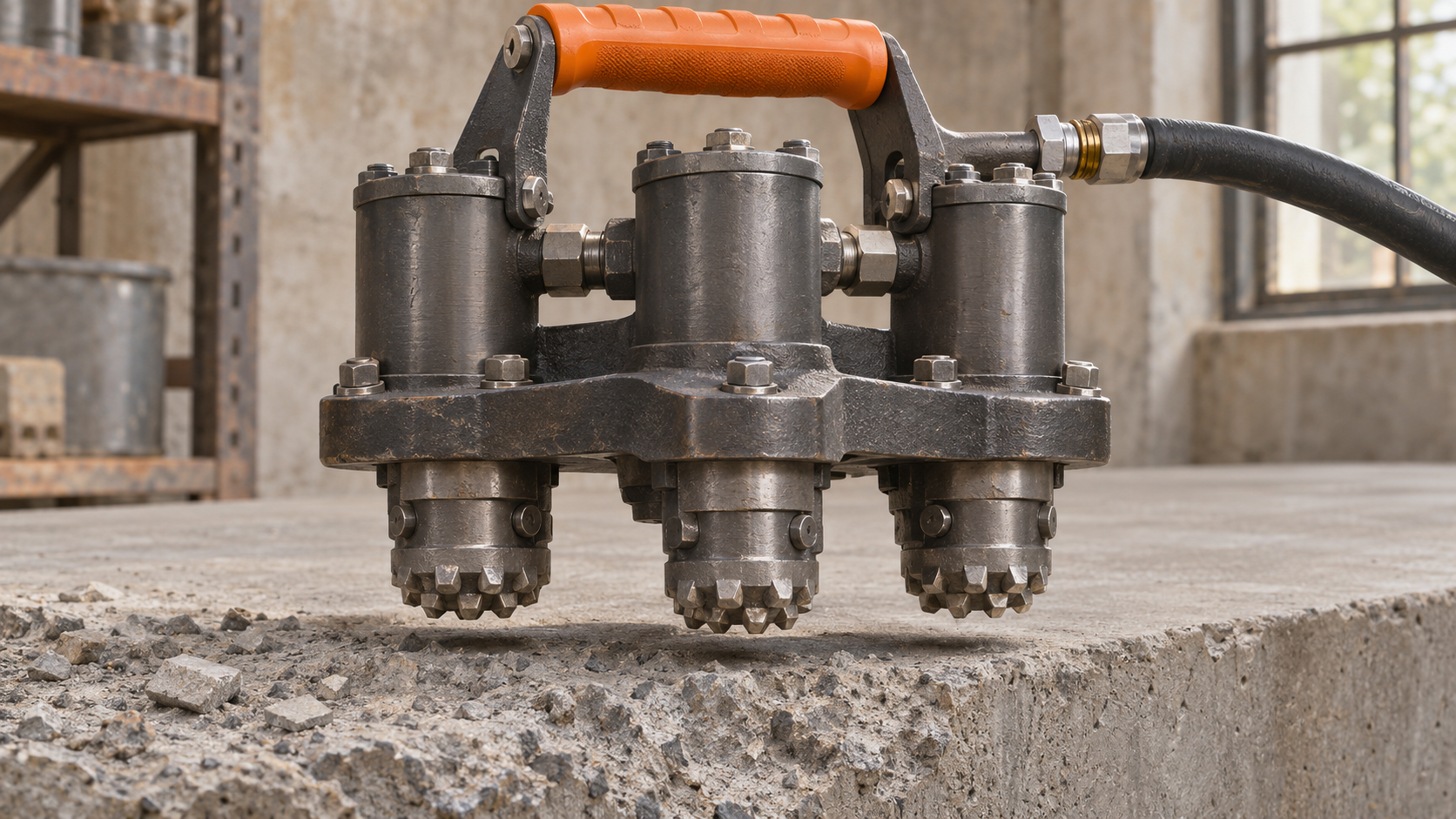
Concrete scabbling removes surface material through repeated impacts from toothed heads, leaving a coarse, chipped texture. Grinding removes material with rotating abrasive tooling and can produce a finer surface. The choice depends on the concrete’s condition and the surface required by the next repair, overlay or coating. A rough appearance alone does not prove that concrete is ready to bond.
If a floor specification calls for a roughened concrete surface, scabbling may be one method to discuss. If the aim is to smooth a high spot, a coarse impact finish may be the wrong result. Understanding the difference helps you ask for the preparation your project needs.
For work on the Gold Coast or in Brisbane, Sirius Concrete Cutters’ concrete scabbling service is the starting point for discussing impact preparation. Explain what will go onto the concrete afterwards, as well as what needs removing.
How does scabbling remove concrete?
A scabbler repeatedly drives hard, toothed heads against the surface. Each strike concentrates force over small contact points and fractures material locally. As those strikes cover an area, small pieces break away and leave an irregular texture.
Think of the difference between chipping a stone and rubbing it with an abrasive. Both remove material, but the contact action differs. Scabbling works through impact; it does not make a continuous saw cut or polish the slab.
The exposed surface contains peaks and hollows. How it develops depends on the concrete and the equipment used, so naming the method does not specify an exact finished texture. A request for “one pass” leaves the required result unclear.
This distinction matters when comparing quotes. Two contractors may both describe surface preparation while allowing for different removal, edge work and cleaning. Ask how the finished surface will be checked, rather than comparing the machine name alone.
How is grinding different?
Grinding brings rotating diamond tooling into contact with the concrete. The abrasive action wears away material as the tooling moves across the slab. It can be used for high spots and other preparation tasks, with the resulting texture depending on the tooling and process.
Scabbling generally leaves a coarser chipped surface than a fine grinding pass. Grinding does not automatically mean a polished finish, either: preparation grinding and decorative polishing are different briefs. Our guide to how much concrete grinding can remove explains why removal limits need consideration.

- Left: toothed heads strike the concrete and chip away material, leaving a coarse profile.
- Right: rotating abrasive tooling wears the surface; a fine pass can leave a finer texture.
- The sections compare removal actions, not specified depths or an accepted profile for a particular repair.
If the project requires a smoother transition at a high spot, discuss concrete grinding. If it requires a coarse impact profile, discuss that specified result with the scabbling team. Neither method is selected simply because it sounds more powerful.
Surface profile and removal depth are different
Profile describes the texture left at the surface. Removal depth describes how much concrete is taken away. A heavily textured patch can have pronounced peaks and hollows without having removed the same amount everywhere.
Imagine two preparation briefs. One asks for a rough surface that a specified bonded repair can attach to. The other asks for a doorway threshold to meet a finished floor level. Those are different outcomes, even though both involve removing concrete.
Provide any required profile, depth limit and final level as separate information. If the specification names a surface comparator or inspection method, include it. Avoid substituting a photograph of “something rough” for the actual requirement.
The standards organisation AMPP’s concrete surface preparation guidance explains why inspection must consider existing coatings, contamination, concrete soundness, defects and moisture concerns before choosing a method.
Why rough concrete still needs inspection
A new layer bonds to the material beneath it. If that material is loose or weakened, creating more visible texture does not make it sound. Cleaning away chips and dust is therefore a different task from confirming the condition of the remaining concrete.
Impact preparation can also produce fine cracks near the surface, often called bruising. The American Concrete Institute’s technical explanation of concrete bruising describes how this weakened layer can reduce repair bond strength if it remains.
That does not mean every scabbled surface has the same damage. It means the preparation specification and inspection need to address the remaining substrate, with any further treatment or testing determined for the repair system.
Ask who accepts the prepared surface before the next layer is installed. A visual check, a specified test and the next trade’s installation requirements answer different questions. Agree the handover point before work begins so a rough finish is not mistaken for completed repair preparation.
What can scabbling prepare a surface for?
Scabbling can form part of preparation for a specified concrete repair or bonded layer where its removal action and texture are suitable. The follow-on material determines what preparation is acceptable; scabbling is not a universal first step for every coating.
For example, a thin decorative finish and a thicker repair layer may need different surface conditions. Choosing the preparation first and asking the next installer to accommodate it afterwards can leave an avoidable mismatch.
Also separate surface preparation from deeper concrete deterioration. If concrete is breaking down below the intended removal zone, the repair extent needs assessment. Chipping the top does not establish the cause or restore the slab’s structural capacity.
Plan for dust, noise and neighbouring areas
Scabbling is an impact process, so surrounding activities and sensitive spaces matter. Tell the contractor about occupied rooms, equipment, work below a suspended slab and restrictions on noisy or vibrating work.
WorkSafe Queensland’s construction silica dust guidance includes scabbling among processes that can release respirable crystalline silica. Dust that has settled can become airborne again through unsuitable cleaning, including dry sweeping or compressed air.
Ask how dust will be controlled at the work area, how nearby people will be separated from the task, and how debris will be collected. A visibly clean room does not establish exposure levels. Our article on dust control during concrete grinding explains the related distinction between capturing dust and cleaning afterwards.
What should you send for a scabbling quote?
Send the site suburb, approximate area and photographs showing the surface and access route. Identify existing coatings, visible defects, edges, columns and other obstructions. Include the preparation specification and describe the repair or finish that follows.
Mark any depth limit or retained level clearly. Ask whether the quote includes edges, debris removal, final cleaning and inspection, and who handles any further preparation needed before the next trade starts.
If the required profile is unknown, say so. Resolving that with the responsible designer or installer gives the cutting team a useful target and makes the scope easier to compare.
Sirius Concrete Cutters provides concrete scabbling in Brisbane and the Gold Coast. Send your surface details and photographs to discuss the preparation your project needs.