
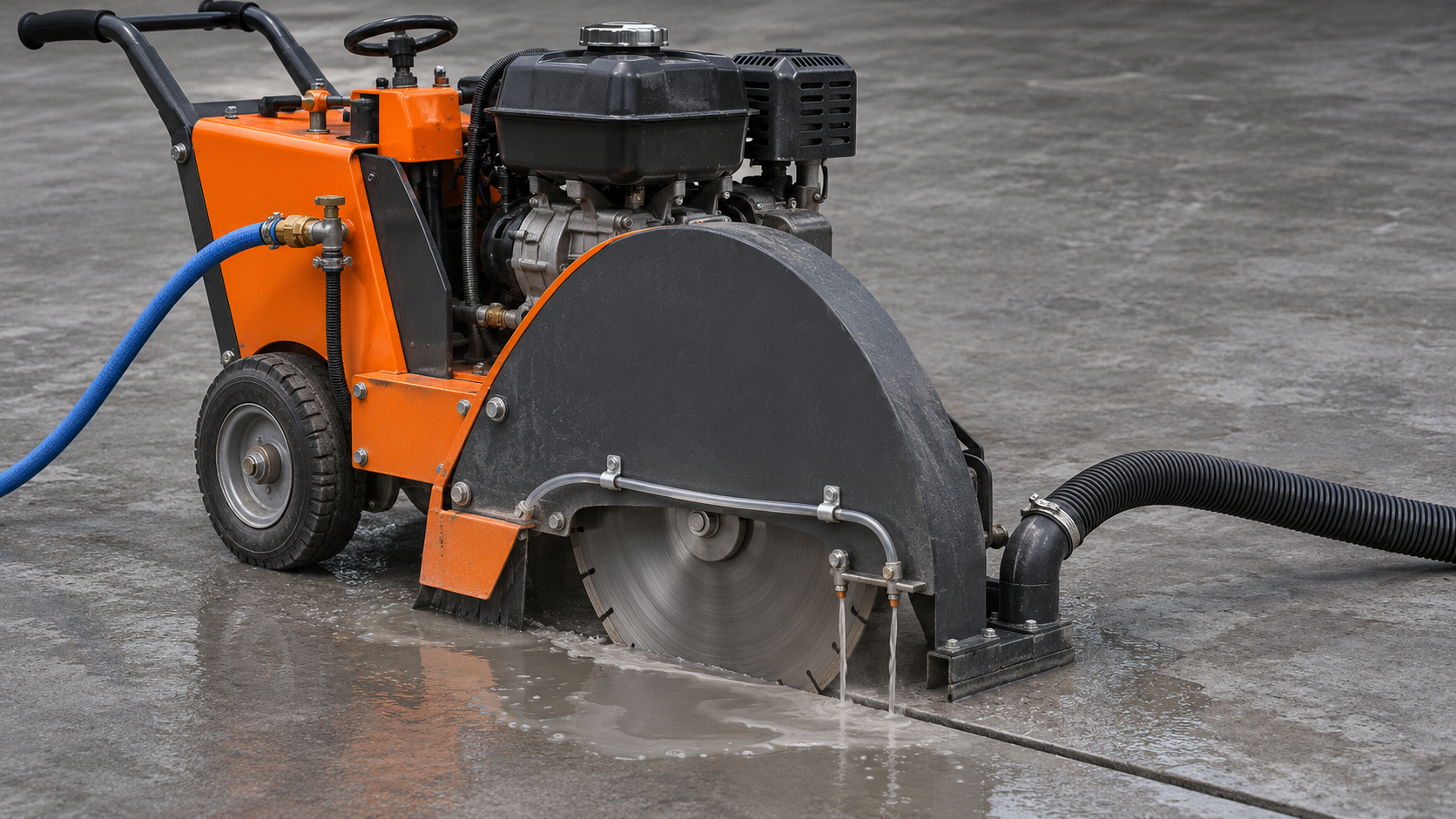
Water is used in concrete sawing to cool the cutting blade and reduce airborne dust at the cut. It also carries fine cut material into a wet slurry that needs collecting. A wet-cutting plan therefore needs both a suitable water supply and a way to contain the waste. Water on the floor alone does not show that dust is adequately controlled.
If you are arranging a trench, a driveway alteration or the removal of a concrete section, the water hose is part of the cutting setup. It affects access, nearby finishes, drainage and clean-up, so it belongs in the conversation before the saw arrives.
For horizontal slab cuts in Brisbane or on the Gold Coast, start with Sirius Concrete Cutters’ floor sawing service. Describe where the cut will run and what surrounds it, including any place where water could cause a problem.
What does water do at the blade?
A diamond saw blade removes concrete as its working rim moves through the material. Contact generates heat. Water delivered to the cutting zone helps carry that heat away and keeps the working area wet as fresh concrete is exposed.
This is different from hosing down the slab once before cutting. The blade keeps meeting new material along the cut and through its depth. The delivery system needs to keep reaching the working zone while the cutting happens.
The UK Health and Safety Executive’s explanation of wet cutting describes both dust suppression and the cooling and lubricating effect of water. The useful question for a site owner is whether the proposed saw and water system suit the cut, rather than whether someone can put a hose nearby.
Cut length and depth still matter. A short surface cut and a long trench through a slab are different tasks, even if both use water. The contractor needs the actual scope to choose the equipment and plan the supply.
Why does wet cutting produce slurry?
Cutting does not make the removed concrete disappear. The blade creates fine particles. With water at the cutting zone, some of that material becomes suspended in liquid, producing the grey slurry visible around a wet cut.
Think of two separate paths: clean water travels towards the blade, while used water and concrete fines travel away from it. A workable setup accounts for both. Supplying water without planning the outgoing slurry leaves an unfinished part of the job.
On a flat slab, slurry may spread around the saw. On a sloping driveway, the same liquid may head towards a doorway or gutter. The site’s shape changes the collection problem even when the cutting method stays the same.
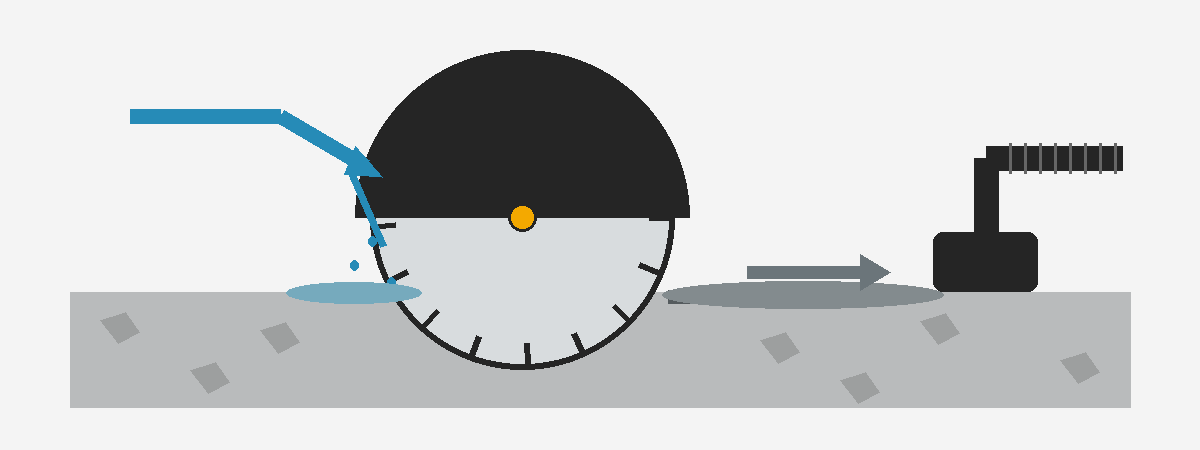
- Blue arrow: clean water is directed to the blade and cutting zone.
- Grey arrow: water and concrete fines become slurry, which needs containment and collection.
- The side section shows the paths, not equipment settings or a specified cutting depth.
Does water make concrete cutting dust-free?
Water reduces dust generation at the source, but a wet surface is not a measurement of airborne exposure. Nor does the absence of a visible cloud prove that everyone nearby is protected. Fine respirable particles can be difficult to see.
WorkSafe Queensland’s guidance on construction silica dust explains that water suppression needs an adequate supply throughout the work. Wetting material beforehand is insufficient. The assessment also needs to consider people around the work area and the controls appropriate to the task.
For a buyer, this changes what to ask. Instead of asking only whether the contractor cuts wet, ask how dust will be controlled in that location and how other occupants will be separated from the work. An occupied shop, an enclosed room and an open external slab present different conditions.
Water also does not address every other cutting hazard. It does not locate a concealed cable, establish whether a slab section can be removed or resolve engine exhaust in an enclosed area. Those questions still need their own answers before the method is settled.
Where should the slurry go?
Plan collection before cutting starts. Do not assume that grey water can be washed towards the nearest stormwater drain. Queensland’s building-site water release guide specifically identifies containing runoff from water-cooled saws as a way to keep contaminants out of the stormwater system.
The arrangement may involve containment around the work and collection with suitable wet equipment. The contractor should explain what is proposed for your site, where collected waste will be held and who is responsible for taking it away.
Clean-up matters after the saw stops. If slurry dries, its fine residue can become airborne when disturbed. Leaving a thin grey film to dry and sweeping it later undermines the purpose of controlling dust during the cut.
Ask what condition the area will be left in. A price covering cutting alone may describe a different scope from one covering containment, collection and waste removal. Clarifying that difference is more useful than comparing a single rate without the inclusions.
What if water could damage the surrounding area?
Tell the contractor about sensitive rooms, finished floors, electrical equipment, open service penetrations and occupied areas below the slab. A cut upstairs needs consideration of where liquid could emerge underneath, as well as what is visible beside the saw.
Water sensitivity is a reason to assess the method and containment carefully. It is not a reason to improvise uncontrolled dry cutting. Any alternative needs equipment and dust controls suited to the actual task and location.
Photographs help show access and nearby finishes, but include the wider surroundings. A close-up of the marked line may leave out a drain two metres away or a threshold downhill. Show both sides of the work where access allows.
What should you confirm before booking?
Give the contractor the proposed cut layout, approximate dimensions, known slab information and the purpose of the opening or removal. Explain whether the building will remain occupied and whether access needs to stay open during the work.
- Where will the water supply come from, and is it suitable for the planned equipment?
- How will slurry be contained and collected, including near drains and openings?
- What dust controls and separation from other people are planned?
- Does the scope include clean-up, waste removal and handling the cut concrete?
For the broader preparation conversation, see the concrete-cutting site preparation checklist. To compare the work included in a quote, read what affects concrete cutting cost.
Sirius Concrete Cutters provides floor sawing in Brisbane and on the Gold Coast. Get in touch with your cut layout and site details to discuss the work.