
Summary
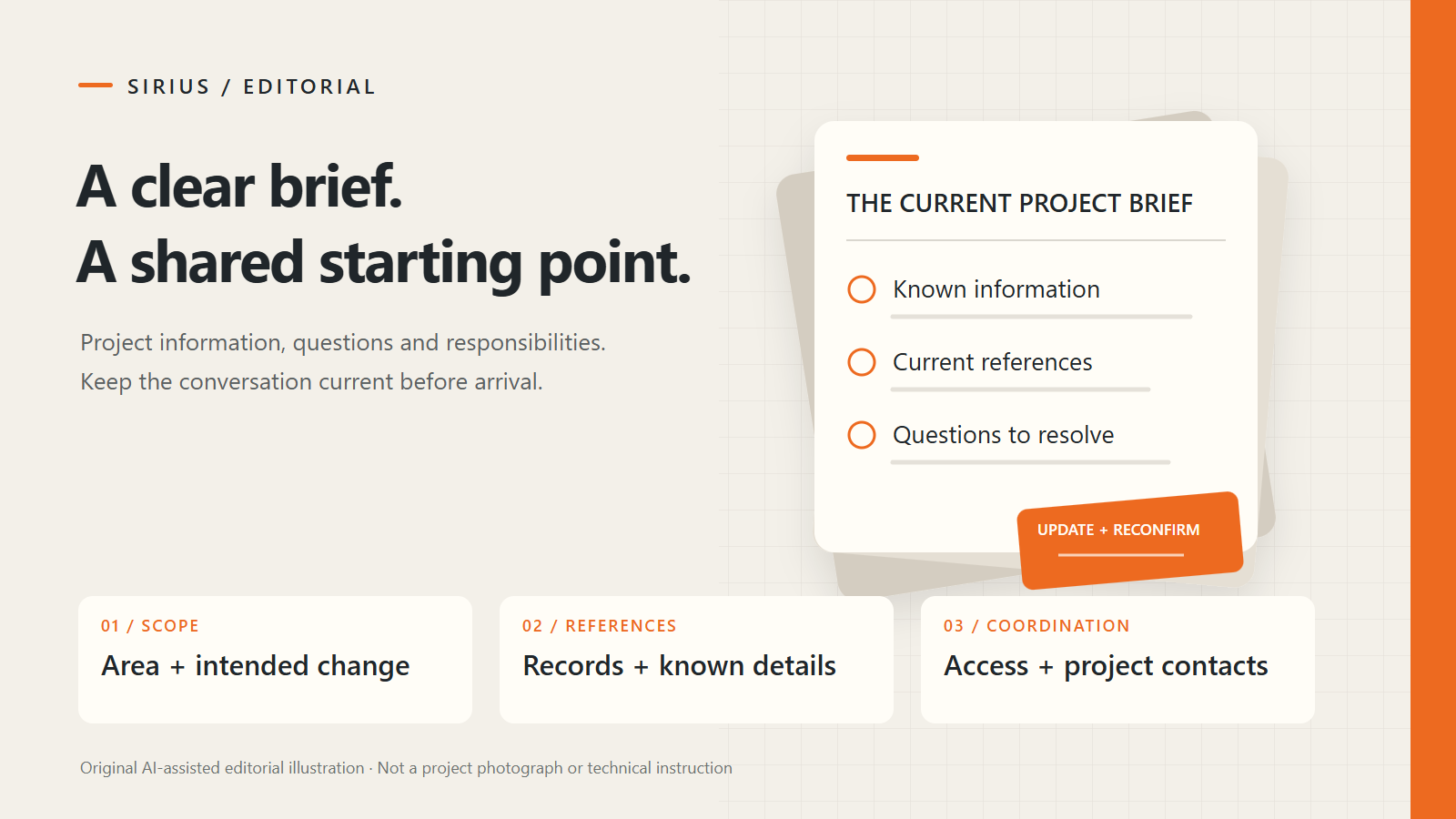
Prepare a clear site brief, accurate access information and agreed project details before concrete cutting work begins. Confirm the current work area, material information, timing considerations, responsibilities and outstanding questions so the discussion starts with the information at hand rather than assumptions.
Start with the agreed scope before work begins
Good preparation starts with a shared understanding of what is being discussed.
Before concrete cutting begins, the most useful information is not a long list of technical assumptions. It is a clear description of the proposed work, the area involved and the details that still need to be confirmed.
A practical starting point is to identify:
- what part of the site is being considered
- what change is intended
- what information you already have
- which decisions still belong to the responsible project parties
Sirius Concrete Cutters provides broader concrete cutting service information for customers preparing a project discussion. A useful brief can include the required opening or finish, material, known thickness information, access details and existing photos.
The purpose of this preparation is not to approve the work or decide the technical approach. It is to make sure the people involved are discussing the same proposed scope.
A clear scope discussion should distinguish between:
- confirmed information, such as the current marked area or recorded site details
- questions that still require review
- decisions that belong to the appropriate project contacts
This prevents an early description from being treated as a final instruction.
For example, a marked area on a plan may show where a change is being considered, but the responsible project parties may still need to confirm how that information relates to the final proposed work.
Confirm the current cutting area and layout information
The physical location of the proposed work should be clear before arrival.
A useful preparation step is confirming which area is current and ensuring the people involved are referring to the same information. This may include marked photographs, drawings, plans or another record that identifies the intended area.
The key question is:
What information is being used to describe the current proposed work area?
This is especially important when several versions of a plan, sketch or instruction exist. A project can change during planning, and different people may otherwise be working from different descriptions.
A buyer can help by identifying:
- the current version of the project information
- the location being discussed
- any nearby features that affect the conversation
- any areas that are not part of the proposed scope
If the information has changed, record what changed and ensure the relevant project contact is aware. The purpose is not to create a technical instruction, but to make sure the discussion reflects the current project information.
Where the proposed work relates to an opening, wall change or other structural consideration, the relevant project parties remain responsible for the decisions that determine the final scope.
The related wall opening planning discussion provides separate context for opening, corner, access and handling considerations that are specific to that type of work. Those questions should not be assumed to apply to every concrete cutting situation.
Confirm material information and what is known
Another important part of preparation is identifying what is known about the material being considered.
A buyer may know the general location and purpose of the work but have limited information about the material, thickness or previous changes to the area. Recording what is known and what remains uncertain helps keep the discussion accurate.
Useful information can include:
- the type of concrete or surface involved, where known
- any recorded thickness information
- whether you have drawings or records
- whether the condition of the area has changed since those records were created
Where measurements or descriptions come from existing records, identify that source rather than presenting an estimate as a confirmed fact.
For example, a thickness shown on an older drawing and a thickness measured during a later review may represent different information. The important step is making the source of the information clear so the relevant people can assess what applies.
Concrete scanning may form part of a separate investigation discussion where information about the concrete needs to support a project decision. The Sirius Concrete Cutters concrete scanning service information provides context for that separate service discussion.
Scanning information and decisions about the proposed work are different parts of a project process. The appropriate project parties determine how the recorded information applies to the proposed change.
Coordinate access, timing and surrounding activities
Access information is more than providing an address.
Before work begins, consider what you know about reaching the proposed work area and how the surrounding site conditions may affect the discussion.
Useful access information may include:
- the proposed entry point
- relevant access restrictions already known
- the person responsible for providing access
- timing considerations that affect access to the area
This brief does not certify site readiness or the suitability of the arrangements. It is to make the known conditions visible so the appropriate people can discuss any unresolved matters.
A project may also involve other people, trades, occupants or activities around the proposed work area. If those circumstances are relevant, they should be identified as part of the communication process.
A hypothetical example may help illustrate the importance of keeping information current.
Imagine a project where an access route discussed during the scope conversation later becomes occupied by another activity, or where the marked layout changes before arrival. The useful response is to record the change, notify the responsible project contact and ask for reconfirmation of the affected arrangements.
The change itself does not determine the final outcome. It identifies information that needs to be reviewed before relying on the earlier discussion.
See section 6.2 of the Queensland consultation, cooperation and coordination code for background on coordination.
WorkSafe Queensland consultation, cooperation and coordination guidance
This source provides background context only. It does not replace project-specific decisions, technical assessments or the responsibilities of the people managing the work.
Separate related work from the agreed cutting scope
Preparation also means understanding what is included and what is separate.
A broader project may involve multiple activities, but those activities should not automatically be treated as one combined scope.
For example, surface preparation or finishing work may be separate from the concrete cutting discussion. If those services are relevant, identify them separately so the project conversation remains clear.
The Sirius Concrete Cutters concrete grinding service information provides context for a related surface-preparation service. It should not be interpreted as meaning grinding is automatically included within concrete cutting work.
Similarly, removal, disposal, follow-on work and next-trade requirements should be discussed according to the actual project arrangements. A clear handover depends on what the relevant parties have agreed, not assumptions about what happens after cutting.
Before You Dig Australia provides homeowner guidance about deciding who will lodge an enquiry before contractor work involving excavation and notes that received plans are indicative and may not contain every detail inside a property boundary. Where a project includes excavation or may affect underground assets, the relevant parties should identify what records are held and what information still needs to be considered.
Before You Dig Australia homeowner guidance
This guidance applies only where that type of work or asset information is relevant. It is not a universal requirement for every concrete cutting project.
A practical final review before arrival
A useful final review is not about creating a technical checklist for the work itself.
It is about confirming that the people involved have the same understanding of the proposed project information.
Before the discussion progresses, consider whether you can identify:
- the current proposed work area
- the information used to describe it
- known material details and their source
- known access information
- timing considerations
- responsible contacts
- questions that remain unresolved
If something has changed, record the change and ensure the relevant project contact knows what information needs to be reviewed.
The buyer’s role is to provide accurate information and identify questions. The trained contractor assesses the actual configuration relevant to the proposed work. Responsible project parties remain responsible for decisions, approvals and arrangements that apply to the project.
Sirius Concrete Cutters primarily serves the Gold Coast and also works in Brisbane. A clear project discussion begins with the information at hand, the proposed work area and the questions that need to be considered.
Frequently asked questions
What information should I provide before discussing concrete cutting?
Provide a clear description of the proposed work area, existing photos or marked plans, access information, known material details and the right project contact. Separate confirmed information from questions that still need review. If a detail is unknown, identify it rather than making an assumption.
Should I decide the cutting method before contacting a provider?
No. Prepare the information you can confirm about the site, proposed outcome, access and constraints. The discussion can then focus on what further information is needed for the proposed work. Avoid turning an early assumption into a fixed requirement before the relevant parties have reviewed the project details.
Discuss your project
Bring your site information, photos and questions together, then discuss your project with Sirius Concrete Cutters.