
Summary
A wire sawing proposal depends on more than the location of a proposed cut. The buyer decision is whether the reviewed arrangement accounts for the complete wire route, the selected system requirements and the surrounding work area before the proposal is treated as settled.
A cut location does not define the complete wire sawing arrangement
When a project team is considering a nominated structural cut, the visible cut area may be the first thing identified. However, the location of that cut is only one part of the information needed to understand whether the proposed arrangement can be assessed.
Wire sawing involves physical conditions beyond the concrete surface being changed. The relationship between the cut, the wire route, the installation arrangement and the surrounding work area all affect what information needs to be reviewed.
Sirius Concrete Cutters’ wire sawing service information provides the service context for a nominated structural-cut discussion. The relevant project information can include the cut, location, drawings, dimensions, access and interfaces. These details help define the enquiry, but they do not establish a universal arrangement, structural outcome or permission to proceed.
The practical buyer question is:
Has the reviewed arrangement been considered against the actual project restrictions, or does the proposal still rely on information that has not been confirmed?
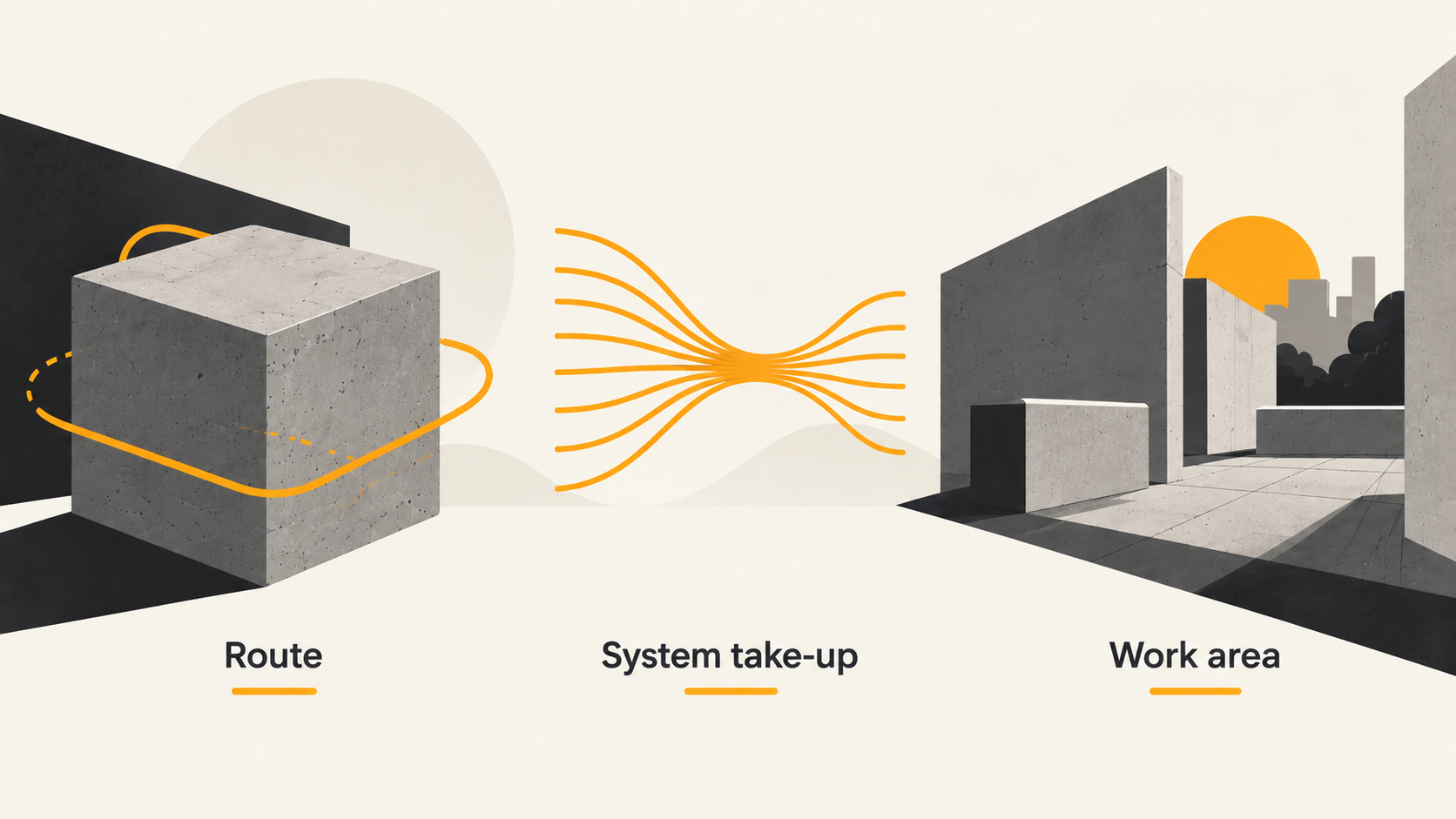
The following three physical conflicts can affect this assessment.
1. Complete wire route and installation
A proposed cut face can be clearly identified while the complete wire route remains unresolved.
This is the first distinction a buyer needs to understand. Seeing where the concrete needs to be altered does not necessarily establish how the complete cutting arrangement can be accommodated within the project conditions.
The Husqvarna CS10 operator manual describes different mounting arrangements and notes that wire-through holes may be needed. It also describes a wire route around the workpiece and back to the saw within the named system’s configuration. These manufacturer examples support a practical planning lesson: the complete arrangement needs to be assessed rather than assuming the visible cut face alone defines the work. Husqvarna CS10 operator manual
These manufacturer examples do not identify the equipment Sirius uses or establish the suitability of an arrangement for a particular site.
The actual conflict is between the proposed cut location and the conditions around it.
A project may have:
- an accessible area where the cut is intended
- restrictions on intrusive work
- retained surfaces that need consideration
- access conditions that affect how the arrangement can be reviewed
The buyer supplies the actual access information and any restrictions on protected surfaces or project requirements. The trained cutting contractor assesses the complete configuration. The responsible project parties remain responsible for authorising intrusive work and confirming the decisions that apply to the project.
The decision is not whether a cut can be described.
The decision is whether the reviewed arrangement can be accommodated within the permitted scope, or whether that restriction requires a different project decision before the proposal can be treated as settled.
2. System wire take-up and the selected system requirements
A second conflict is assuming that the size or shape of the intended opening explains the complete wire arrangement.
It does not.
A photograph of a cut location or a description of an opening may help explain the project, but it does not establish how a particular wire sawing system’s arrangement fits those conditions.
The Husqvarna CS10 manual identifies a wire magazine as part of that named system and describes the wire arrangement as part of how the system operates. In this context, the magazine refers to the system’s wire take-up, not general onsite storage of spare equipment. The practical planning lesson is that the cutting contractor needs to assess the actual wire arrangement and system requirements rather than relying only on the surface description of the opening. Husqvarna CS10 operator manual
For the buyer, the relevant information is the project input:
- the intended cut
- the dimensions and shape being considered
- the available access information
- any relevant restrictions or interfaces
The wire arrangement and the requirements of the actual system being considered are matters for assessment by the trained cutting contractor.
The practical comparison is not between a small opening and a large opening.
It is whether a proposal has considered the system-specific dependency that applies to the actual project conditions.
The buyer decision is:
Does the proposal address the actual wire arrangement that needs to be assessed, or does it assume the surface description alone determines the suitability of the approach?
This keeps the discussion focused on the information required for the project rather than assumptions based on appearance.
3. Wire-path work zone and surrounding activity
The third conflict extends beyond the cutting system itself.
A proposed wire arrangement can interact with surrounding areas that are not immediately obvious from the cut location. This can include adjacent activities, access areas or other parts of the project environment that need to be considered by the responsible parties.
The Husqvarna CS10 manual includes illustrations of wire-path-related risk areas for named wall, additional-pulley and floor configurations. Those examples show that the relevant area can extend beyond the drive-unit footprint. The manual also includes a warning relating to broken wire. The practical lesson is that the actual arrangement and surrounding activity need to be assessed for the specific project rather than applying a universal zone or layout. Husqvarna CS10 operator manual
The conflict for the buyer is whether the proposed arrangement overlaps with something the project team has not accounted for.
For example, the project may need to understand:
- what activity is occurring around the proposed work area
- whether other operations interact with the proposed arrangement
- whether access conditions beyond the immediate cut location have been considered
The buyer provides the actual surrounding activity and access information. The contractor and relevant duty holders assess the work zone and applicable controls for the specific circumstances.
Once the contractor and relevant duty holders have confirmed the specific work-zone requirements, the buyer’s decision is whether adjacent activity can be separated under that reviewed arrangement, or whether a different agreed work window or project decision is required.
It is not the buyer’s role to create a universal work-zone rule, distance or protection method. Those decisions remain specific to the actual work conditions and responsibilities involved.
Investigation information and structural decisions remain separate
Information gathered during a project can help inform decisions, but different information serves different purposes.
Concrete scanning information and the decision about a proposed structural change serve different purposes. Keep the investigation information separate from the responsible project parties’ decision about the final cut location and the proposed work.
The Sirius Concrete Cutters concrete scanning service information provides the relevant service context. Scanning information and structural decisions are separate parts of the wider project process.
For official Queensland background on processing crystalline silica substances, consult WorkSafe Queensland’s guidance. The contractor and relevant duty holders review the information that applies to the actual work.
Comparing a proposal by the information it addresses
A useful wire sawing comparison is not simply whether the proposed cut is visible or whether the opening can be described.
The stronger question is whether the proposal addresses the physical conditions that affect the arrangement being considered.
A buyer can review whether the discussion has considered:
- the complete wire route and installation restrictions
- the requirements of the selected system arrangement
- the surrounding work area and related activity
This approach helps separate the proposed concrete change from the wider project decisions that determine whether the information is complete.
For broader context on separating concrete cutting scope, removal considerations and handover points, the existing cutting out a section of concrete article provides related discussion without replacing the project-specific assessment required for a wire sawing enquiry.
Sirius Concrete Cutters primarily serves the Gold Coast and also works in Brisbane. The most useful starting point is to discuss the required opening or finish, material, known dimensions and site access information relevant to the project.
Discuss your project
If you are considering wire sawing in Brisbane or the Gold Coast, discuss your project details and the information available for review with Sirius Concrete Cutters.