
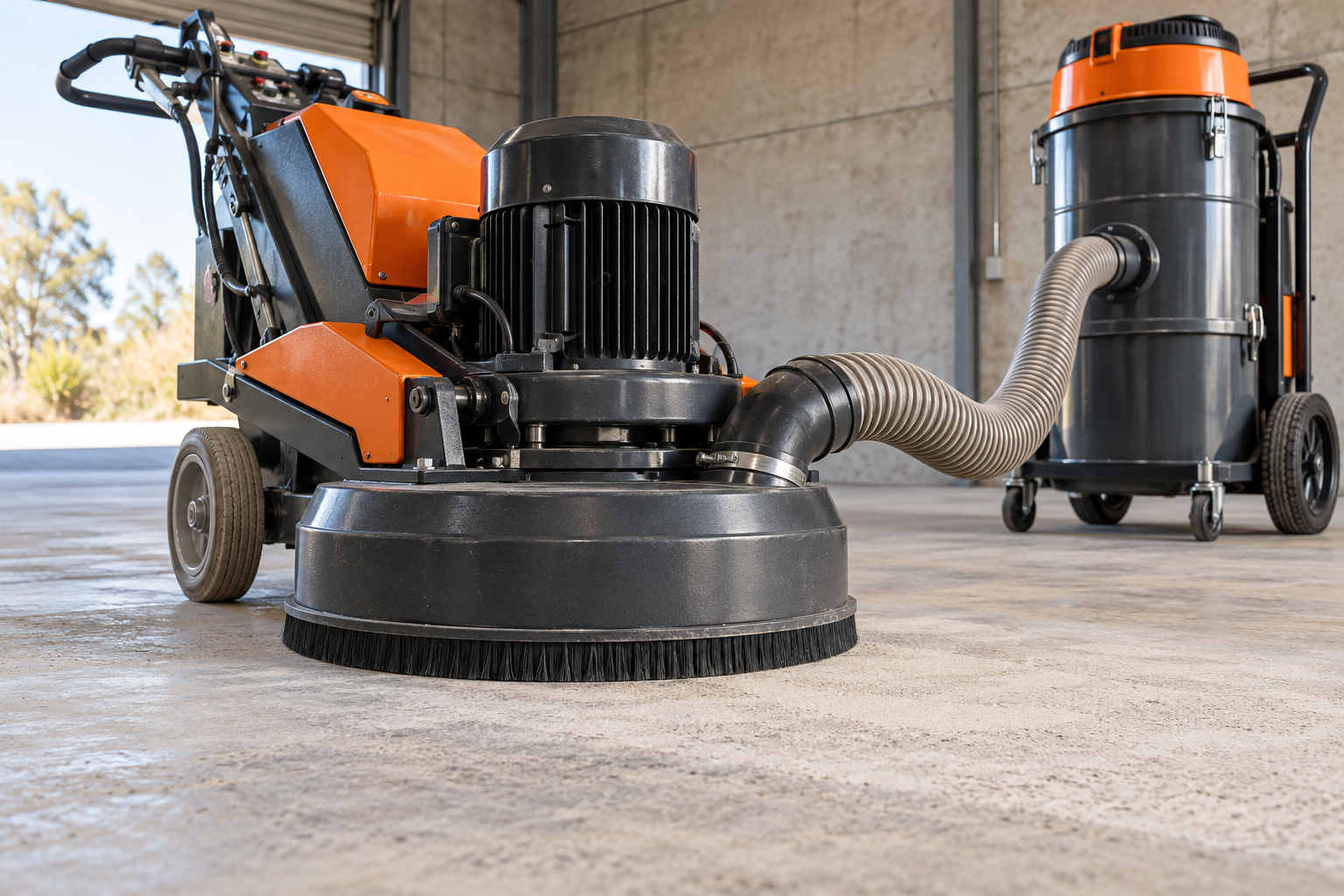
Dust from concrete grinding is controlled by capturing it at the grinding head with a suitable extraction system, or by using a suitable wet method, together with isolation and planned clean-up. The right arrangement depends on the equipment, material and work area. A promise of a tidy floor is not enough to explain how people nearby will be protected.
If you are comparing quotes for an occupied home, shop or warehouse, ask how dust will be managed throughout the job. The grinding pass, edge work, waste handling and handover all deserve an answer.
For a Brisbane or Gold Coast project, start with Sirius Concrete Cutters’ concrete grinding service. Describe the floor problem and which adjoining spaces need to remain usable so the work can be assessed properly.
Why grinding creates a dust-control problem
Grinding uses abrasive tooling to remove material from the surface. That action breaks concrete into smaller particles. Some dust may contain respirable crystalline silica, so controlling what becomes airborne matters as well as collecting the visible debris.
Removing an old coating also involves the material above the slab. Tell the contractor what you know about that coating or adhesive and provide any available records. Its appearance alone cannot identify its contents.
A useful starting question is: “What will be removed, and how will the dust from that work be contained?” This connects the control plan to the actual task rather than to the size of the room.
How on-tool extraction works
A dust shroud surrounds the grinding area. Air drawn into that enclosure carries dust through a hose to an extractor, where it is collected and filtered. Capturing dust close to where it is produced reduces the opportunity for it to spread through the room.
The shroud, hose and extractor work as a system. A poorly fitting shroud, damaged hose or unsuitable extraction arrangement can undermine capture at the head. The presence of a vacuum beside a grinder does not establish that the combination is appropriate.

- Left: the shroud surrounds the grinding area at the concrete surface.
- Middle: the hose connects capture at the head to the separate extractor.
- Right: collected material enters the extractor; the complete system must suit the task.
Safe Work Australia’s guidance on working with crystalline silica substances explains on-tool extraction and the need to inspect and maintain controls. Ask how the contractor checks the arrangement before work and keeps it effective as the job progresses.
Why the extractor matters
Hazardous construction dust requires equipment selected for that purpose. A household vacuum is not an equivalent simply because it picks up visible debris or has a filter advertised as HEPA.
WorkSafe New Zealand’s explanation of industrial vacuums and portable extractors for hazardous dust distinguishes the rating of a complete machine from its filter alone. That distinction helps a buyer ask a more useful question than “Does the vacuum have a good filter?”
Ask which dust-control equipment will be used for the proposed work and why it suits the task. You do not need to choose the machine yourself; you need a clear explanation of what the quote includes.
Does wet grinding solve the problem?
A suitable wet method uses water at the working area to help suppress dust. It also creates slurry: water mixed with the removed material. The job therefore needs a collection and disposal plan, not just a water supply.
Water use must suit the equipment and site. Explain any nearby electrical installations, occupied rooms, drains or finishes that could affect the decision. Wet work is a method to assess, rather than an automatic answer for every floor.
Consider a garage opening onto a driveway. A useful discussion covers where slurry will be collected and how it will be kept from spreading beyond the work area. Leaving it to dry would create another dust-management task.
Can other people use the building?
Tell the contractor who will be nearby: residents, staff, customers or other trades. Include shared entrances and routes through the building. A room that is empty during an inspection may be a busy access corridor during the proposed work.
Ask which spaces need to be isolated, how access will be controlled and whether the work should be staged. For example, a shop needs an agreed customer route; a home needs an agreed boundary between the work zone and living areas.
WorkSafe Queensland’s silica guidance covers dust controls, respiratory protection and checking effectiveness. A contractor’s plan needs to address the actual work conditions. An open door or a visibly clear room does not, by itself, establish that exposure is controlled.
Include edges and clean-up in the quote
A large floor grinder cannot describe every part of a job. Work beside walls, around columns or at thresholds may involve different equipment. Ask how dust will be captured during that work too.
Also clarify who handles collected dust, filter servicing, bags and any wet waste. Clean-up can disturb settled material, so it belongs in the control plan. Dry sweeping or blowing dust around is not a suitable substitute for a planned collection method.
Put the clean-up boundary in writing. Does the scope cover the work zone only, the equipment access route, or both? Who checks adjoining spaces before they are used again? These questions help prevent a gap between the grinding work and the building’s return to use.
What should you ask before booking?
Send a short brief with photographs, approximate area, known coatings and the intended next floor finish. Identify the suburb, access route and any rooms that must stay occupied. Mark unknown information clearly.
Then compare the proposed scopes using the same questions:
- What material is being removed, including any existing coating?
- How will dust be controlled during the main floor work and the edges?
- Which areas need to be isolated, and for how long?
- Who manages collected dust or slurry and the final clean-up?
- How will the controls be checked, and who confirms the area can return to use?
Keep the dust discussion separate from the required surface result. Our guide to how much concrete a grinder can remove explains the limits of surface removal. The concrete floor grinding guide covers the broader preparation brief.
Sirius Concrete Cutters provides concrete grinding in Brisbane and the Gold Coast. Get in touch with your floor details and occupancy requirements to discuss the scope.