

Concrete grinding can reduce a local raised edge on a footpath where removing material is appropriate. It cannot lift a sunken slab, fill a depression or stop movement beneath the path. Before booking, have the height difference, concrete condition, drainage and ownership assessed so the proposed treatment addresses the actual problem.
A lip between two concrete panels is a common reason to ask about grinding. The important question is whether reducing that edge will create a suitable walking surface, or simply change the shape of a path that needs a different repair.
For a private path on the Gold Coast or in Brisbane, Sirius Concrete Cutters’ concrete grinding service is the starting point for discussing suitable surface removal. Send photographs showing the whole transition as well as the raised edge.
How grinding changes a raised concrete edge
A concrete grinder uses abrasive tooling against the surface to remove material. At a suitable raised join, the work can reduce the high side and form a transition towards the adjoining panel. The lower panel stays at its existing height.
Picture two otherwise sound panels meeting at a joint, with one edge standing above the other. Removing a wedge from the high side changes the abrupt step into a longer transition. It does not move the panels back into their original positions.
The length and shape of that transition matter. Removing material only from a very narrow strip can leave a steep change in slope. Extending the treatment changes a larger area of the surface, so the available space and the concrete that must remain both need assessment.
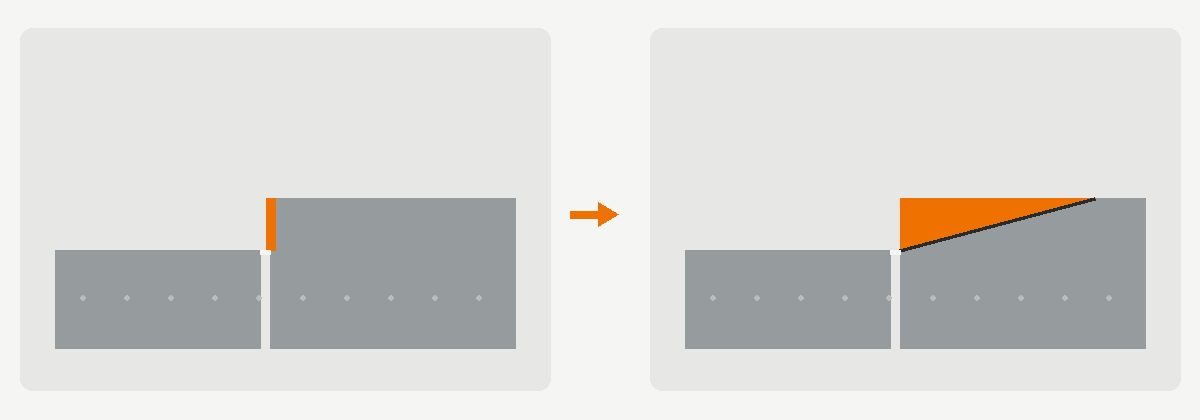
- Left: an abrupt raised edge where two concrete panels meet.
- Right: the orange wedge represents material removed from the higher panel. The dark sloping line is the remaining surface.
- The lower panel and the joint remain in the same positions. The drawing shows the change in profile, without prescribing a removal depth or slope.
This is why “grind the lip off” is an incomplete instruction. The contractor needs to understand the proposed finished profile, not just the edge that catches your eye. Our guide to how much concrete grinding can remove explains the separate question of permitted removal.
A local lip is different from a sunken or tilted panel
A small affected area near a joint and a whole slab that has settled are different problems. Grinding changes the top surface. It does not add support beneath the concrete, raise a low panel or restore the original fall across a path.
Imagine a panel that has dropped at one end and now holds water near a doorway. Lowering the neighbouring high edge might soften the join while leaving the depression and water problem in place. The repair decision therefore needs a wider view than a close photograph of the lip.
Look for cracks, broken corners, rocking sections and changes that have developed over time. Share those observations with the person assessing the work. Where movement or support is in question, the cause needs assessment before surface removal is chosen as the answer.
Check roots, drainage and the path around the defect
Tree roots, changes in the supporting ground and drainage problems can affect a path. A grinding pass does not establish which cause applies, and it does not prevent a moving panel from changing again. Nearby trees are information to include in the brief, not permission to cut roots.
Check the route in both directions. A transition that looks straightforward from one side may sit beside a drain, a gate, steps or a narrow entry. The proposed work needs to fit those fixed features and leave water able to follow the intended drainage route.
WorkSafe Queensland’s guidance on external areas identifies changes in level, tree roots and wet or contaminated surfaces as hazards. Reducing one lip does not deal with every risk along the walkway.
Who owns the path determines the next step
Establish whether the affected concrete is a private path, shared property or part of a public footpath before arranging work. A path outside your property boundary may be managed by council or another asset owner. For shared property, confirm the responsible manager and who can authorise the work.
For a Brisbane public footpath, use Brisbane City Council’s footpath maintenance reporting service. Council describes grinding as one possible initial treatment, with replacement among the other options it may arrange. Reporting the problem allows the responsible party to assess it.
Include the exact location, photographs and the nature of the hazard. Use the relevant local council’s reporting route for a public path elsewhere. A contractor’s quote for private work should not be treated as authority to alter a public asset.
Agree the finished surface, not just the amount removed
Ask how the transition will be checked after grinding. The brief should address the remaining height change, the shape of the treated area and its relationship to the surrounding path. There is no single removal depth that makes every uneven footpath suitable.
Texture matters outdoors too. Grinding can expose aggregate and leave a visibly different patch. A surface that appears smooth in a photograph has not, by that fact alone, been assessed for slip resistance in wet conditions. Discuss the intended finish and any required assessment before the work starts.
Do not assume local grinding will make a whole route meet an accessibility specification. Crossfall, slope, width and adjoining features may need separate consideration. If the project has design or access requirements, provide them so the responsible designer can define the result and acceptance checks.
Plan pedestrian access and dust control
Even a short grinding job needs a plan for people using the path. Tell the contractor whether it serves an occupied building, a shared entrance or a delivery route. Discuss isolation, an alternative route, access for equipment and how the area will be handed back.
Safe Work Australia’s silica guidance explains that concrete grinding can generate hazardous dust and identifies controls including dust collection, water suppression and isolation. Being outdoors does not remove the need to assess exposure and protect people nearby.
Ask about dust or slurry collection, clean-up and waste handling as part of the scope. Our article on dust control during concrete grinding explains those arrangements in more detail.
What to send with a footpath grinding enquiry
Send the address, approximate affected length, wide photographs along the path and close views of each join. Include any existing measurements, known movement, drainage concerns and nearby trees, gates or drains. Explain who owns the path and which areas must stay accessible.
Ask whether grinding is suitable, what would trigger a different repair and how the finished transition will be accepted. Compare the same scope across quotes, including controls and clean-up; our grinding cost guide explains why those inclusions matter.
Sirius Concrete Cutters provides concrete grinding on the Gold Coast and in Brisbane. Get in touch with the path details to discuss the surface removal scope.